
Eurovision is in crisis — perhaps the biggest in its 70 year history.
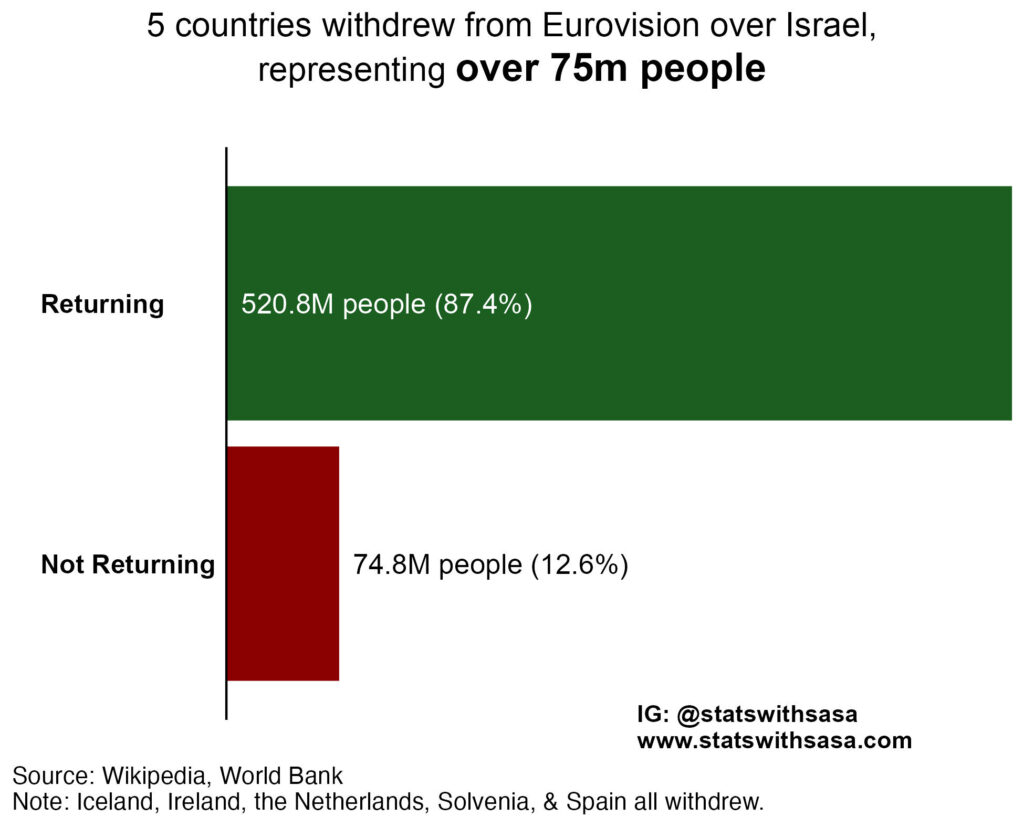
Following a 2025 contest marred by controversy surrounding Israel’s participation, five major nations — Iceland, Ireland, the Netherlands, Slovenia, and Spain — declined to return this year. They argue that Israel should not remain in the competition while it continues to wage a war in Gaza that has killed tens of thousands. They point to the European Broadcasting Union’s swift expulsion of Russia after its 2022 invasion of Ukraine.
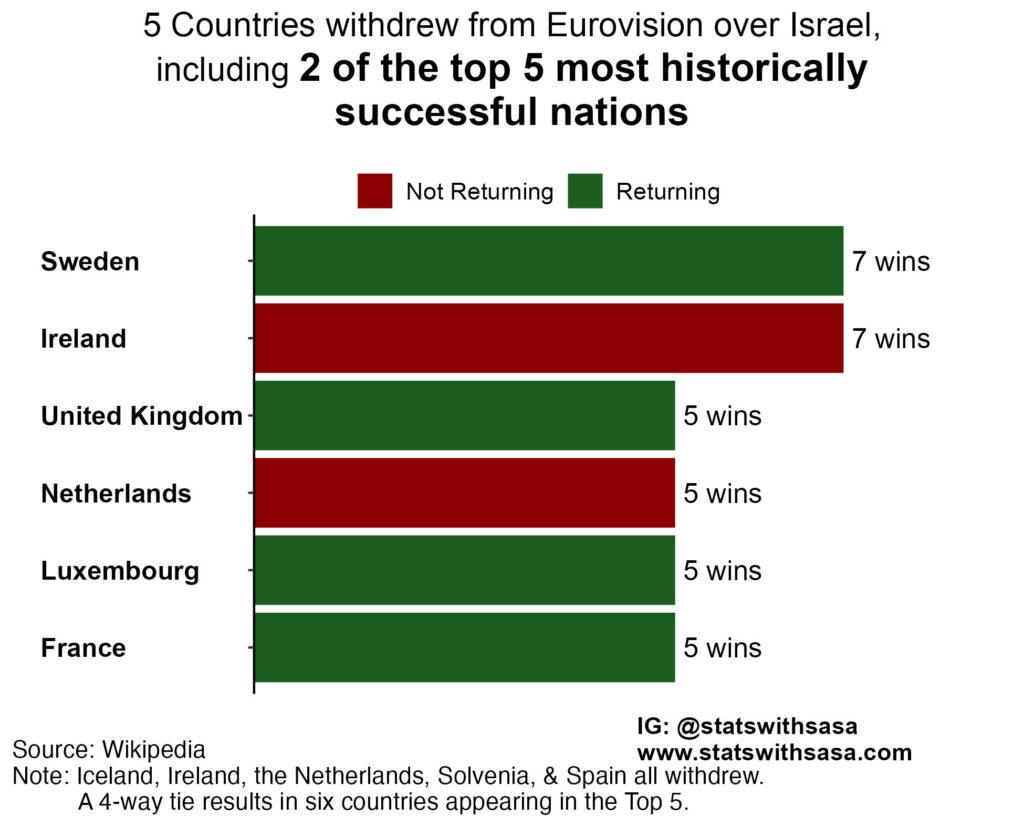
This is not a fringe protest from smaller delegations. Spain is one of the “big 5” countries that provides substantial funding to the contest. Ireland is tied for the most wins in Eurovision history. Together, the boycotting countries comprise a large portion of Eurovision’s fanbase.
To that end, I decided to take a quick, data-driven look at the impact of this boycott and what it means to Eurovision 2026.
Population impact of boycott
One easy way to measure the scale of the boycott is population.
Competition impact of boycott
But a country’s population isn’t the end-all-be-all when it comes to Eurovision. For example, Poland has over 36 million people and has competed 27 times since 1994. Yet it has never won Eurovision. Meanwhile, Ireland has won the competition a record-high 7 times despite its relatively small population of ~5.4 million.
To that end, we can see how many past Eurovision winners have come from boycotting countries.
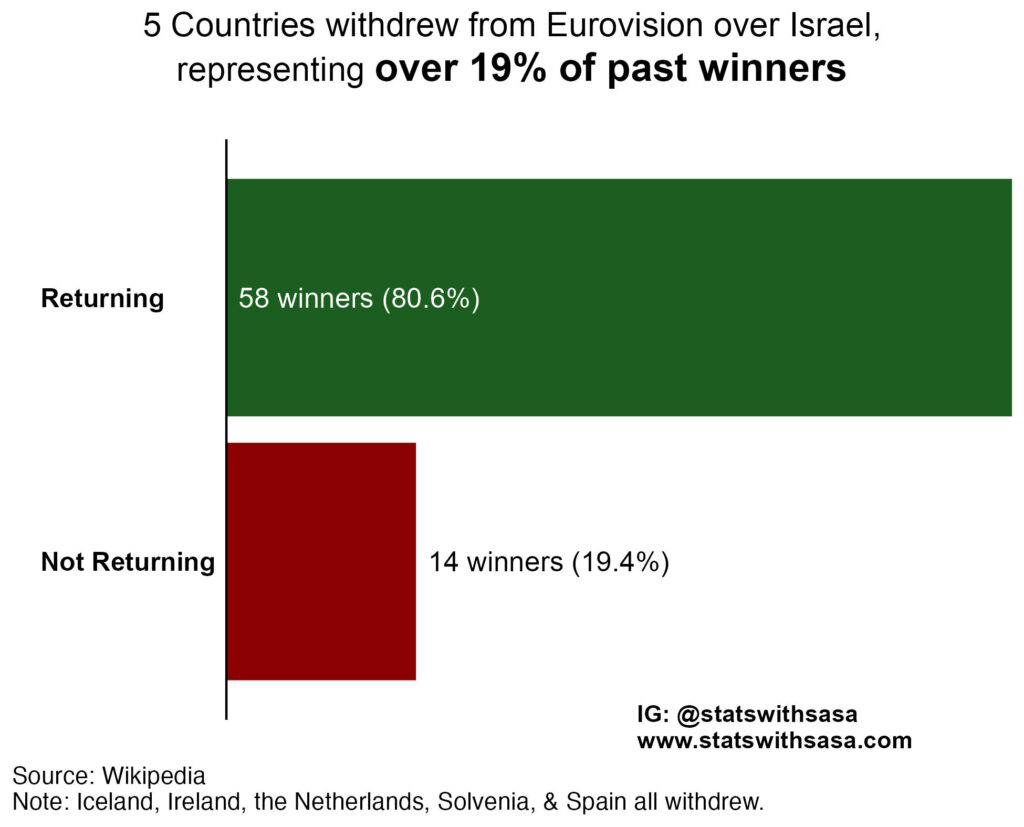
I find this visual particularly stark. Boycotting countries account for nearly 20% of past Eurovision winners.
We come to a similar conclusion if we restrict ourselves to the most historically successful Eurovision nations.
Conclusions & Thoughts
Regardless of where you fall politically, the scale of this boycott is difficult to ignore. These are not fringe Eurovision participants. Together, the withdrawing countries represent a meaningful share of the contest’s competitive history and audience.
If additional broadcasters follow their lead in future years, Eurovision could face one of the most significant legitimacy challenges in its modern history.
Thanks for reading! If you enjoyed this article, please consider subscribing below.